A former medical researcher explains how changes in auditory support cell signaling — not visible ear damage — may be involved in persistent ringing. And why this perspective helps explain cases where hearing tests show nothing unusual.
Attention: “This content may disturb those who profit from your suffering.”
If you live with tinnitus, you already know the hardest part was never just the sound.
It’s what the noise slowly steals from you over time:
- Your sleep
- Your focus
- Your memory
- Your patience
- Your peace
And the most frustrating part?
Being told everything looks “normal” — while the brain never truly switches off.

What neuroscience suggests may be happening in persistent tinnitus
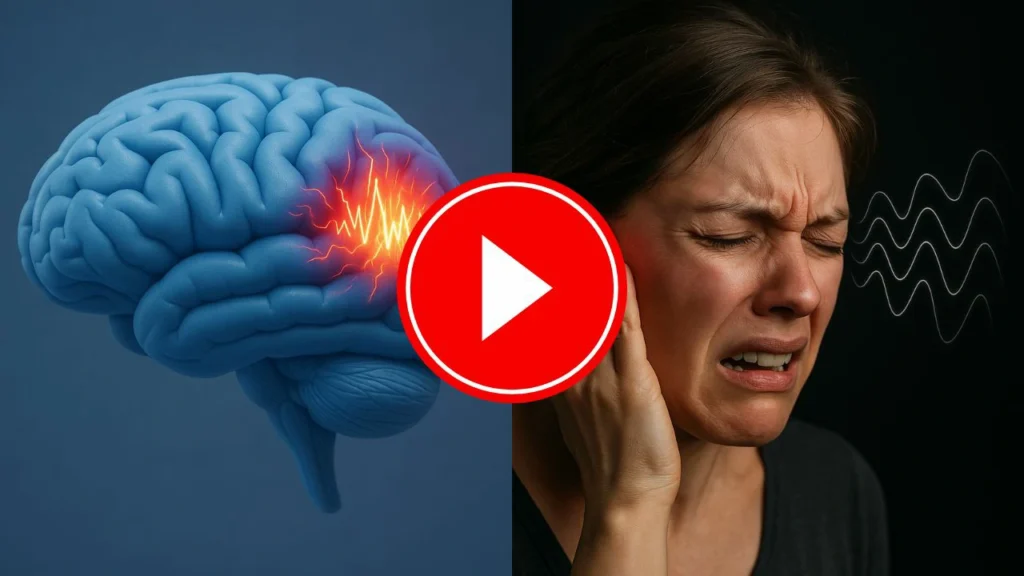
Neuroscience research suggests that, in many cases, tinnitus may not begin as an ear problem alone.
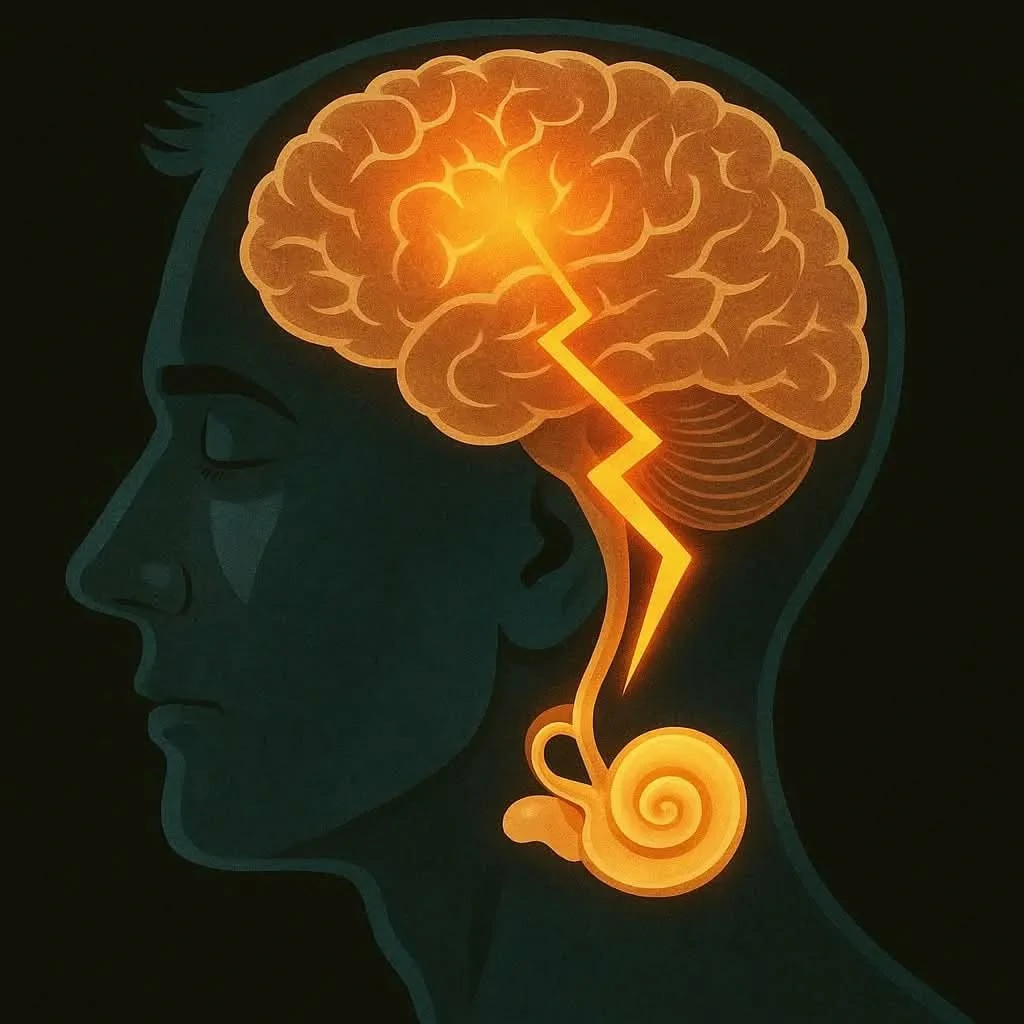
Inside the inner ear, specialized cells help convert sound vibrations into electrical signals that travel to the brain.
From there, the auditory cortex interprets these signals and turns them into what we recognize as sound.
However, when this communication becomes overloaded, inefficient, or disrupted, the brain may no longer receive clear input.
And when the brain lacks clear signals, it may begin compensating on its own.
Instead of silence,
it fills in the gaps.
This process may be associated with sensations such as:
- Ringing
- Buzzing
- Hissing
- Clicking
- Metallic or phantom sounds that don’t come from any external source
Not because the sound exists — but because the signal is being misinterpreted.
This same pattern of disrupted auditory communication has been linked, in research settings, to:
- progressive hearing difficulties
- mental fatigue and brain fog
- trouble focusing or retaining information
- increased cognitive strain over time
Which raises an uncomfortable but important question:
If the issue involves how the brain processes sound…
why do most approaches focus only on the ear?
If your tests came back “normal” but the ringing never stopped, this matters.
Many people with persistent tinnitus hear the same thing after exams and scans:
“Everything looks normal.”
Yet the noise continues.
That’s because standard hearing tests are designed to measure ear damage —
not how sound signals are processed by the brain.
The video below explains:
why traditional exams often fail to detect processing issues
how the brain may begin generating phantom sounds on its own
why shifting focus from the ear to neural communication can change how tinnitus is experienced

Jonathan Miller spent decades studying how neurological processes affect sensory perception.
Jonathan Miller worked for many years in academic and medical environments, focusing on how the brain interprets sensory information.
Over time, his research and clinical exposure led him to question a common assumption — that tinnitus is always an ear-based condition.
Instead, he began exploring how subtle disruptions in neural signaling may influence how sound is perceived, even when standard hearing tests show no structural damage.
That shift in perspective changed the way he understood tinnitus entirely.
“When I stopped looking only at the ear and started examining how the brain processes sound, the pattern finally began to make sense.”
— Jonathan Miller


See if any of these experiences sound familiar
People with persistent tinnitus often notice patterns like these — especially when the noise has been present for months or years.
You may recognize yourself if you experience:
- constant or intermittent ringing
- hissing or buzzing that feels louder at night
- difficulty falling or staying asleep
- pressure or fullness in the head
And over time:
- unexplained irritability or anxiety
- trouble focusing on simple tasks
- recent forgetfulness
- mental fog or cognitive fatigue during the day
Many people are told this is “just aging” or something they must learn to live with.
However, some research suggests that when the underlying process is better understood,
the brain may still retain its ability to adapt over time.
What people often realize after years of unanswered questions about tinnitus!
Many people spend years trying to understand why the ringing never fully goes away — especially after being told their ears look “normal.” Here are a few experiences commonly shared by people who explored a neurological perspective.
“I always assumed my tinnitus was an ear issue, since all my tests came back normal.
When I started learning how stress and brain processing could play a role, the noise felt less overwhelming over time.”
— Mike, Michigan
“I dealt with ringing for years, mostly at night. Doctors kept saying it was just age.
Looking beyond the ear and understanding the neurological side helped me sleep better and feel more at ease.”
— Anna, Denver
“I had constant tinnitus for over 10 years and tried everything.
Once I understood that it wasn’t only about the ear, but how the brain interprets sound, things finally started to make sense.”
— Frank, New York
What neuroscience has consistently observed:
Neuroscience has long recognized that the brain is adaptable.
This ability — often referred to as neuroplasticity — describes how neural networks adjust, reorganize, and respond to ongoing stimuli.
In the context of auditory perception, this means that how sound signals are processed can change over time, especially when communication between the ear and the brain becomes inefficient.
When the right conditions are present, auditory circuits may:
- reduce the intensity of phantom noise
- improve clarity in how sounds are interpreted
- ease the mental strain often associated with persistent tinnitus
This area of research has been explored for decades across universities and research centers worldwide.
No guarantees. No medical claims. Just an explanation grounded in how the brain works.
Frequently Asked Questions
This video is intended for people who experience persistent tinnitus or ongoing ringing —
especially those who’ve had exams or hearing tests come back “normal” but still struggle with the symptoms.
It may also be relevant for individuals who notice mental fatigue, difficulty focusing, or increased discomfort in quiet environments.
People with tinnitus, mild hearing loss, or related cognitive symptoms — even after normal test results.
No.
The video discusses non-invasive concepts related to how the brain processes sound.
There are no procedures, devices, or treatments involved — only an explanation based on widely studied neurological principles.
No.
This content is educational only and does not involve medication, prescriptions, or medical interventions.
It’s designed to help people better understand their symptoms — not replace professional care.
Many people who explore this explanation report that it helped them better understand why previous approaches didn’t fully address their experience.
Because tinnitus can vary widely from person to person, individual outcomes differ.
The video focuses on understanding the process — not guaranteeing results.
No.
This video does not diagnose, treat, or cure any condition.
It presents an informational perspective meant to complement — not replace — guidance from qualified healthcare professionals.
Ignoring tinnitus may feel manageable at first — until it isn’t.
For many people, persistent ringing isn’t just an inconvenience.
It can be a sign that the brain is operating under continuous sensory stress.
Left unexamined, this strain may affect sleep, focus, and overall mental clarity over time.
The video below explains:
– why tinnitus can persist even when exams look normal
– why so many common approaches fail to address the underlying process
– what may change when attention shifts from the ear to neural communication
(Access may not remain available for long.)